Jackson - Hurricane Task
None of this was true. What was, however, true was that they were African Americans and this drew the line from the beginning, regardless of how talented they were or not. Of course, they knew this, yet they decided that through their work they could challenge the established stereotypes. And so they did.
On August 1st, 1981, Music Television (MTV) was launched and although segregation legally ended in 1964, some 17 years before, MTV would only offer airplay to white rock artists. Maybe MTV’s bosses decided on their own to erect such a colour barrier, yet they did resonate with the general feeling that African Americans were not really welcome on white only stations and to the white audiences, thus, they had to resign themselves to the thought that their artistry was still considered “race music” and it had no place in the mainstream. Michael Jackson and Prince had never done that:they never considered their art limited to a “race” or “ethnicity”, it had no boundaries, the sky was the limit as far as they were concerned. While this was true, it was indeed very threatening to the white establishment and its deep-rooted self-created feelings of hatred towards the African Americans.

They were not supposed to be or do better than their white counterparts, because it was generally believed that they could not. Of course, being held back for so much time by the slavery and segregation laws, it is easy to understand why there was such a thinking in the first place among white people and by 1980s, racism was very much alive in the USA. However, these two artists, while acknowledging and being thankful for their background, destroyed the notion that there was something acceptable and not acceptable for a “black person.” There was not such a thing, the ideas of limiting what African Americans could do were artificially created, in order to manipulate and explain something unexplainable such as racism which, in turn, led to slavery and segregation.

So, their greatest message was that art was art regardless of background and it had a meaning of its own, rather than being connected to race, ethnicity, religion, sex, ideologies and so on. Therefore, these two men went on to embody everything that the white establishment feared. In the beginning and throughout the 1980s, Prince sang and dressed in such a way that raised the question of gender and sexuality:is he a man? Is he a woman? What is he? Who is he? Who does he think he is to do this? What’s the meaning of his songs?And Prince Rogers Nelson sang his way through these questions in his 1984 “I Would Die 4 U” from the “Purple Rain”album:
I'm not a man
I am something that you'll never understand
I'm not your friend
I am a dove
I'm your conscious
I am love
All I really need is 2 know that
U believe”
My name is Prince, the one and only
I know from righteous, I know from sin
I got two sides and they're both friends
If you try to stop 'em they kick that ass
Without a pistol, without a gun
When you hear my music you'll be havin' fun
That's when you mine”

Time and again, he confuses and amazes the audiences and leaves it spellbound as to who he really is and what is he like in real life. Yet, what they do not understand is that for Prince, this is real, this is how he leads his life:as a musical genius and nothing can come between him and his artistic expression. No matter how many controversies he stirs up, he will continue to be who he is, whatever that may be. Probably he hasn’t fully decided yet or maybe he is just intent on showing us his many alter egos, yet one thing is certain:he is not limited to a certain external idea of what an African American artist should be, for all intents and purposes, he is free and always unmistakably himself. He never gives people the time to adjust, he is always innovating, creating, reshaping in an unconditioned state from within or outside. This is the message of his 1997 track “Don’t Play Me”:
I put my ass away and music I've played
Ain't the type of stereo you're tryin' to feed
And it ain't much you say, don't play me
My only competition is, well, me in the past
Time and time if time existed movin' ever so fast
Don't play me.”
Thriller night!
And no one's gonna save you
From the beast about to strike
You're fighting for your life
Inside a killer
Thriller tonight, yeah.
I'll make you see
That this is thriller, thriller night
'Cause I can thrill you more than any ghost would ever dare try
Thriller, thriller night
So let me hold you tight and share a killer, thriller here tonight!”

On the same album, unlike Prince, in the track “Human Nature”, Jackson describes himself as a human and pleads with people to realize that, in his sister’s words, "in completedarkness we are all the same, it is only our knowledge and wisdom that separates us, don't let your eyes deceive you."
Why, why does he do me that way?
If they say, why, why? Tell 'em that is human nature
Why, why does he do me that way?”
Then every head turned with eyes that dreamed of being the one
Who will dance on the floor in the round”.
And to me that's really true
But my friend you have seen nothin'
Just wait 'til I get through
Because I'm bad, I'm bad, come on
You know I'm bad, I'm bad come on, you know!”
and you can't touch me, 'cause I'm untouchable
and I know you hate it, and you can't take it
You'll never break me, 'cause I'm unbreakable
Now you can't stop me even though you think
that if you block me, you've done your thing
and when you bury me underneath all your pain
I´m steady laughin', while surfacing”.

They are powerful household names in the entertainment industry and went beyond it. Performers – African American and white alike - nowadays cite them as influences, yet nobody comes close to their artistry. Why? Because they constantly and relentlessly challenged the audience, having them on the edge of their seats, never comfortable. They were never able to fit them into categories of preconceived notions of what artists or African Americans should be. They superseded this thinking and they followed Albert Camus’ words that "The only way to deal with an unfree world is tobecomeso absolutelyfreethat your very existence is anact of rebellion."

In the end, I will leave you with some more socially aware lyrics (go listen to the songs if you haven’t done that already):
Am I invisible because you ignore me?
Your proclamation promised me free liberty, now
I'm tired of bein' the victim of shame
They're throwing me in a class with a bad name
I can't believe this is the land from which I came
You know I really do hate to say it
The government don't wanna see
But if Roosevelt was livin'
He wouldn't let this be, no, no”
Michael Jackson Forgiven in Death
Jackson: Either Loved or White World Creation
Michael Jackson Philanthropy
Jackson and Obama Expanded Base
Past Wrongs Set Aside
“I'm not a woman
I'm not your lover
I'm your messiah and you're the reason why
I'm not a human
According to the above quoted lyrics, Prince is neither a man, nor a woman, he isn’t even human. Yet, he is a saviour, he is the embodiment of love and also, thinks of himself as a dove as found also in “When Doves Cry” from the same album: “Don’t make me chase you, even doves have pride”.Of course, his lyrics hint at divinity and the dove is the symbol of the Holy Spirit in Christianity - the embodiment of purity, but of white purity. Therefore, through his seemingly harmless and personally assumed song, Prince is telling us that African Americans are whatever the whites are and even more. Although God is not human and cannot be black or white, for centuries, Europeans cringed at the idea that perhaps Jesus could be represented as an African American, Asian or of any other background. If you believe in a higher force, then divinity just exists, it does not belong to any race, colour, ethnicity or religion. And of course, the interpretation of these lyrics could go even further: Prince is not merely a soul with a body, but a god of music, a genius, somebody who rises above any preconceived notion and who gives himself permission to be completely free.
Furthermore, in 1992, in his “My Name Is Prince” from the “Love Symbol Album”, he sings that:
“My name is Prince and I am funky
When it comes to funk I am a junky
Don't try to clock 'em, they're much too fast
That's when I gottcha
“Don't play me, I'm over 30 and I don't smoke weed
Don't play me, I've been to the mountain top
Don't play me, I'm the wrong color and I play guitar
On the other side, Michael Jackson was very much disappointed in the sales of his first album “Off the Wall” which was, by all means, an amazing start for the ex-Motown child-prodigy in 1979. Yet, the sales were not as expected and the album managed to win only a Grammy for Best Male R’n’B Vocal Performance for “Don’t Stop ’Til You Get Enough”. Jackson was upset with the labelling of his music and that he didn’t win Record of the Year. Therefore, he simply decided that this could not happen ever again – his music would never again be automatically labelled as only Rhythm and Blues and he would outsell everything up until that point and afterwards. Easy to decide, hard to make it come true, but not for him. Probably unbeknownst of himself, his next album “Thriller”(1982) would indeed sell more than every artist before him did. As of now, it is speculated that it passed the threshold of 100- million worldwide.

If until then, people saw him as a child-prodigy and a talented singer and songwriter, this album and subsequent videos would put him on the map of becoming the first real megastar – a term commonly known as invented to describe Jackson’s prestige and visibility at an international level. The videos – short films for Jackson – became iconic and set the bar for whatever came after him. Therefore, an African – American became the highest embodiment of music and talent who divided the music into what was before and after him. People compared him to Elvis Presley and The Beatles, yet he and his brothers as The Jackson 5 broke the Beatles’ records when he was just a child. Thus, there was more to him than this, he was unique, just like Prince, he was different, people could not pinpoint him, could not explain him. And his lyrics did not help solve the mystery either:
“'Cause this is thriller!
All through the night I'll save you from the terror on the screen,

The video tells the same story. Yet in it, Michael, the little Motown genius, is now portrayed as a 25-year-old handsome man who becomes a monster, the embodiment of white people’s fears.If white America has been culturally conditioned to see a sexy young black man as monstrous somehow — as threatening or alien or anything less than fully human — then he gives us a monster: a werewolf, a zombie. So again, Jackson captures our conflicted emotions about him and reflects them back at us. But throughout Thriller he shifts back and forth, back and forth, familiar to alien and back again[1]. Each time he shifts into a monster, we — as a culture, but white teenaged girls, especially — are able to express some of the conflicted feelings we’ve been repressing about him, about seeing a young black man as sexually desirable and sexually taboo, as physically attractive and physically threatening, as exotic and fascinating and kind of scary. And each time he shifts back, we’re reassured that he’s still that same sweet-faced Michael Jackson we’ve loved since he was a boy[2].Thriller was the metaphor for society into which Jackson was locked up with people’s prejudices of himself as a person and an African - American, so, in turn, he became the one to torment people and make them feel uncomfortable with their prejudices.
“If they say, why, why? Tell 'em that is human nature
However, on what could be his most famous song, “Billie Jean”, he takes it a step further and becomes the objectof adoration and what is more, of obsession for women and perhaps men to the point he is portrayed as a monster, unhuman. Unbeknownst to him at the time, this would become the curse of his every-day life. As with Prince, people were unable to label him, to put him into a well-known category and be ok with it, because he could not be and refused to be categorized. He and Prince were always, unmistakably, themselves.
“She told me her name was Billie Jean, as she caused a scene
On his next album entitled suggestively BAD (1987), MJ decided to further explain himself to a bewildered and confused audience:
“Well they say the sky's the limit
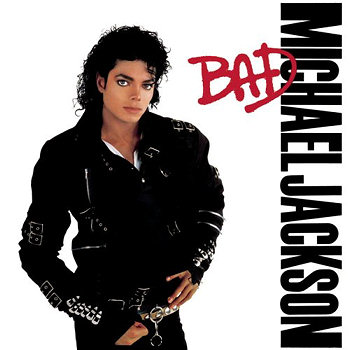
Fast forward to 2001, in the “Unbreakable”song from “Invincible”, Jackson acknowledges that while he became everything the white establishment feared, he rose above those limitations and prejudices and managed to be what he has always been: himself.
“You can't believe it, you can't conceive it
In the end, both Prince and Michael created powerful, influential on-stage personas who delivered electrifying performances, witty lyrics and memorable grooves. They became master manipulators and made the world believe whatever they wished by taking their prejudices and projecting them back onto the audience. Jackson broke down his own records – nobody came close to them ever again - whereas attendance and earnings from tours was concerned and Prince became arguably the most prolific musician in popular music, the first African American to have a song, a movie and an album at number one in the charts.
And so, their art became increasingly more uncomfortable as time drew on: it managed to bring up a mirror to the society which, in the beginning, was very keen on dismissing their music as “race music”. In 1983, MTV was effectively obliged by CBS director Walter Yetnikoff to offer airplay to Jackson’s Billie Jean, the racial barrier had been broken down forever and everybody else took advantage of this move. Prince, Lionel Richie, Donna Summer and so on were all on MTV’s daytime heavy rotation and entered the living rooms of every American with a TV set.
Whatever we may think of their music or of them personally, it is clear that their art and individuality effectively erased prejudices and started anew by offering something very intriguing and interesting in return: gender benders, music geniuses and wonderfully crafted songs to become the soundtrack of a generation.
“Tell me what has become of my rights
Michael Jackson – They Don’t Really Care About Us (HIStory, 1996)
Michael Jackson's relationship with the African-American community was as ambiguous as his changing skin color, his androgynous features and the genetic makeup of his children.
By 1991, when the pop icon released his album "Black or White," many asked the same of Jackson's racial identity.
Those who were close to the star said he spent his career distancing himself from African-Americans and used "derogatory names." Some say he only gave lip service to black charities and causes.
But in death, the pop superstar has been brought back into the fold -- from the lovefest atthis week's BET Awards to the mourners who gathered at Harlem's Apollo Theater where he got his start at age 9.
"He is one of our heroes," said rap artist and music impresario Sean "Diddy" Combs. "As African-Americans, we are not going to let everybody beat him up."
But even as the Rev. Al Sharpton stood loyally by father Joe Jackson's this week in Encino, Calif., many black Americans say they still feel ambivalent about Jackson's legacy of plastic surgery excesses, drug addiction and superstardom.
And some say the child molestation charges -- which arose in 1993 and again in 2003 -- struck the hardest blow to their religious and cultural core.
"If they'd had a black majority jury, they would have convicted," said Stacy Brown, who co-wrote, with producer Bob Jones, "Michael Jackson: The Man Behind the Mask."
"This is not to say that any other race tolerates that kind of behavior, but within the black community, it's not something that stardom could have swayed," said Brown, a media critic for the Scranton Times-Tribune and longtime Jackson family friend.
"Even if he was not molesting them, he was doing things that were inappropriate," he told ABCNews.com. "There's a mind-set in the black community: Why are all these white boys always hanging around? Michael would have stood no chance with an African-American jury."
But when Jackson was exonerated of those charges, many in the African-American community demonstrated another trait -- forgiveness.
"He's one of ours, whether we like it or not. Once it was over, we greeted him with open arms," said Brown. "He gave us an excuse to reaccept him, even though in the past, Michael Jackson turned to black people only when he was in trouble."
Brown was referring to the first allegations of child molestation that erupted in 1993. Jackson made an appeal to the African-American community, making his first-ever appearance at Bethel AME Church in Los Angeles and appearing on BET and NAACP awards shows.
"He'd never done that," said Brown. "He'd shunned that."
Initially, Jackson was viewed as "little more than a Casper-the-ghost-looking bleached skin, nose job, eye shade, straight hair and gyrating hips ambiguous black man who had made a ton of money and had been lauded, fawned over and adored by whites," according to Earl Ofari Hutchinson of the Los Angeles Urban Policy Roundtable.
At the time, he said Jackson's inner circle reported back to the group, "Look, don't believe what you hear. I still identify with the black community. I'm black and that hasn't changed, and I want your support.
"Either you loved him, you identified with him, you saw him as one of your own, as a black performer important to the black community, or you saw him as someone who basically, I don't want to use the term sellout, but ... as a creature and a creation of the white world."
But today, on his blog "The Hutchinson Report," the commentator suggested that Jackson's charitable side be his legacy.
"It is the Jackson that I want to and will always remember," he wrote. "This is the other Michael Jackson."
According to the Chronicle of Philanthropy, the star supported dozens of charities, including USA for Africa, the Make-a-Wish Foundation and the Elizabeth Taylor AIDS Foundation. In 2000, he was listed in the Guinness World Records for Most Charities Supported by a Pop Star -- 39.
He also donated $1.5 million in the settlement from Pepsi for injuries he sustained filming a commercial to the Burn Center at Brothman Hospital in Southern California.
In 1985, he wrote with Lionel Ritchie, "We Are the World," raising millions for famine relief in Africa.
But even Jackson's philanthropic work was scrutinized.
"It was the media attention that intrigued Michael when he first went to Africa at the request of Nelson Mandella," said biographer Brown. "I look at the footage, and Michael was totally separated from the people -- not like Mohammed Ali, who shook hands and talked with the natives."
Jackson's 1992 Heal the World Foundation not only raised money internationally but brought children to Neverland Ranch, which was besieged by police when child molestation charges were filed against the star.
And in 2006, critics pointed out that Jackson had not donated 100 percent of the proceeds of his charity songs, "We are the World" and "What More Can I Give." Jackson retained copyrights and took the royalties to the bank.
But close friend Dick Gregory, the comedian who fasted to protest child molestation charges against Jackson, said the star was childlike but generous.
"Your child sometimes embarrasses you," he told ABCNews.com. "But here is one of the wealthiest cats, and he wore cheap JC Penney shoes, white socks and pants too short. You never saw him with big rings and diamonds."
Gregory, now 76, said African-Americans have always been drawn to the pop star because of his talent.
"No black folks go to a concert because he's black -- he has to be good."
And even his critics came around when Jackson died.
"It's an outpouring as a human being," said Gregory. "Out of all the black folks we know, he hasn't gotten arrested. Out of all the things you can say about Michael and the weirdness, no one ever accused him of stealing."
Others say Jackson's career -- like his own identity transcended race.
When Jackson's music moved from its R&B roots to pop, culminating in the record-breaking 1982 "Thriller" album, another transformation was under way.
Jackson was the first black artist to get a video on the emerging MTV network, breaking down color barriers, according to African-American historians.
"I hate to make this analogy, but it's a most apt one," said Jelani Cobb, president of the history department at historically black Spelman College in Atlanta.
"What Obama did politically, is what Jackson did with 'Thriller," he told ABCNews.com. "He started with a base in the black community and then found an ingenious way to expand it and make it palpable to whites without losing his black core audience."
But Cobb agreed that the African-American community had reached a "threshold point" when the star's child molestation charges surfaced.
Those who believed the vitiligo story, and accepted the changing hair texture, began to have "real doubts and questions" about Jackson's racial ambiguity.
(Jackson had said he was afflicted with vitiligo, a disease that causes skin to lose pigmentation.)
"You couldn't hold him up as a racial example," he said. "He took some lumps for it."
And in 2002, many were taken aback. Jackson left Sony Music Entertainment just before the release of "Invincible," charging its head Tommy Mottola with being a "devil" and a "racist."
"Some people did think he was being mercenary to show up before the black community and charge racism, thinking people would automatically rally behind him," said Cobb. "That didn't go over well."
"You have seen in his passing, there have been black people ferociously loyal to him and talking about how great he was as a black artist," said Cobb. "He had been forgiven before he died."
"He has the gift of magnetism and in some ways, his life was like Benjamin Button," Cobb said of the film of a man who ages backward.
Jackson "starts out a phenomenally old soul at 10 years old -- so mature -- and he ends up like a little boy -- a kid," said Cobb.
For his African-American community, he said, "the dominant emotion is pathos, not contempt."
African-American David Canton, professor of history at Connecticut College, agreed that most viewed the star empathetically as a "grown man with an adolescent mind and eccentric behavior."
Noting that Farrah Fawcett died the same day as Jackson, Canton said, "no one asked about her impact on the white community."
Jackson was not the first African-American to shift toward the white community -- so had singer Lionel Ritchie and O.J. Simpson.
"Jackson had a skin disease, but he did not purchase makeup to that made him darker," Canton told ABCNews.com. "Jackson was a tragic hero, and some in the black community may say that if Jackson remained black he would be alive."
Comments
Post a Comment